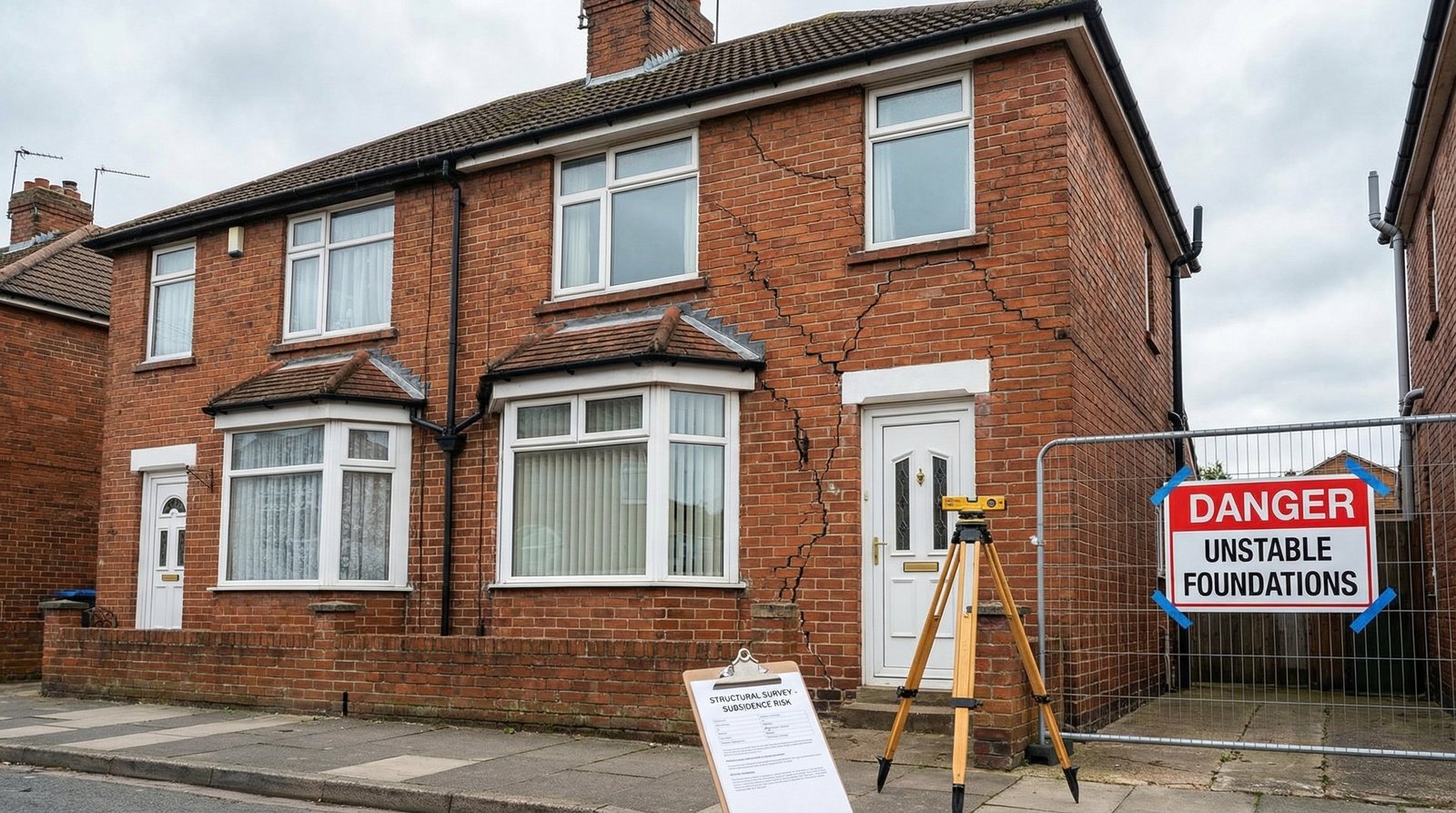
Subsidence is one of the most serious and costly building defects affecting properties across the UK. As chartered building surveyors with extensive experience investigating subsidence, we understand the anxiety this issue causes homeowners. This comprehensive guide explains subsidence causes, how to identify warning signs, investigation procedures, remedial solutions, and insurance considerations. Whether you've discovered cracking in your property or are concerned about potential subsidence, this guide provides expert advice from professional building surveyors.
What Is Subsidence?
Subsidence is the downward movement of the ground beneath a building's foundations, causing the structure to sink unevenly. This differential movement creates structural stress, manifesting as cracks, distortion, and potential structural failure if left untreated.
As expert witness building surveyors, we distinguish subsidence from related ground movement issues:
- Subsidence: Downward ground movement due to underlying soil shrinkage, mining, or washout
- Settlement: Normal downward movement as new buildings consolidate weight onto soil (usually ceases within first few years)
- Heave: Upward ground movement, typically when clay soils rehydrate after tree removal
- Landslip: Downslope movement of ground on sloping sites
True subsidence is progressive, continuing over time unless underlying causes are addressed. Unlike settlement which stabilizes naturally, subsidence requires investigation and often expensive remedial works.
Common Causes of Subsidence
Understanding subsidence causes is essential for diagnosis and treatment. Our extensive experience investigating subsidence reveals several primary causes:
Clay Soil Shrinkage
Clay soil shrinkage is the most common subsidence cause in the UK. Shrinkable clay soils (particularly London Clay, Oxford Clay, and Kimmeridge Clay) shrink significantly during dry periods as moisture content reduces. This shrinkage creates voids beneath foundations, causing buildings to sink into gaps.
Clay shrinkage affects approximately 25% of UK properties, particularly in Southeast England, Thames Valley, and East Anglia. Hot, dry summers exacerbate clay shrinkage, explaining increased subsidence claims following drought periods.
Factors increasing clay shrinkage risk include:
- Shallow foundations (less than 1 meter deep)
- Proximity to trees and vegetation extracting soil moisture
- Poor drainage directing water away from foundations
- Extended drought periods
- South-facing building elevations exposed to maximum sun
Tree Root Activity
Trees near buildings extract substantial moisture from soil, particularly during growing seasons. High Water Demand (HWD) species like oak, willow, poplar, ash, and elm are particularly problematic, with root systems extending well beyond canopy spread.
As chartered building surveyors, we regularly investigate tree-related subsidence. Established trees can extract hundreds of litres daily from surrounding soil. On shrinkable clays, this moisture loss causes significant shrinkage, particularly affecting foundations on buildings' sides nearest trees.
Tree proximity guidelines suggest concerns when trees are:
- Within distance equal to their mature height for high water demand species
- Within 50% of mature height for moderate demand species
- Within 30% of mature height for low demand species
However, these are guides only - individual circumstances vary based on soil type, tree health, drainage, and foundation depth.
Leaking Drains and Water Mains
Leaking underground drainage or water supply pipes wash away soil supporting foundations, creating voids. This "wash out" subsidence can occur rapidly on any soil type, though sandy or gravelly soils are most susceptible.
Warning signs include:
- Unexpectedly high water bills
- Damp patches in gardens or near buildings
- Lush vegetation growth in localized areas
- Sudden crack appearance or movement
Mining and Quarrying
Historical mining and quarrying cause subsidence as underground voids collapse. Coal mining particularly affects properties in former coalfield areas including South Wales, Yorkshire, Durham, Nottinghamshire, and Staffordshire.
Mining subsidence produces distinctive cracking patterns, often affecting multiple properties simultaneously. The Coal Authority maintains records of mining activity and handles compensation for coal mining subsidence damage.
Ground Characteristics
Certain ground conditions increase subsidence risk:
- Soft or compressible soils: Peat, soft alluvial deposits, or filled ground compress under building loads
- Soluble bedrock: Limestone, chalk, or gypsum dissolve in groundwater, creating sinkholes
- Running sand: Fine sand particles migrate with water flow
- Shrinkable clays: As previously discussed
Identifying Subsidence: Warning Signs
Early subsidence detection is crucial for minimizing damage and repair costs. As expert witness building surveyors, we've developed systematic approaches to subsidence identification. Key warning signs include:
Characteristic Cracking Patterns
Subsidence produces distinctive diagonal cracks, typically:
- Width: Cracks wider than 3mm (approximately pen width) are concerning
- Direction: Diagonal cracks running at 45-degree angles, particularly around doors and windows
- Width variation: Cracks wider at top than bottom suggest ongoing subsidence
- Location: External wall cracks, especially at building corners
- Pattern: Stepped cracking following brick/block mortar joints
- Multiple occurrence: Similar cracks on both internal and external walls
However, not all cracking indicates subsidence. Minor hairline cracks often result from normal thermal movement, shrinkage, or settlement. Professional assessment from chartered building surveyors distinguishes benign cracking from serious structural movement.
Doors and Windows Sticking
Structural movement distorts door and window frames, causing them to stick or refuse to close properly. If multiple doors and windows suddenly develop operating difficulties, subsidence may be responsible.
Visible External Signs
- Walls leaning or bulging outward
- Gaps appearing between walls and floors
- Gaps between walls and ceilings
- Cracks in external brickwork, particularly at corners
- Extension separation from main building
- Rippling or undulation in brickwork
Internal Indicators
- Cracks in plaster appearing suddenly or widening
- Doors and door frames pulling away from walls
- Cracks around window reveals
- Uneven floors or sloping
- Skirting boards separating from walls
Subsidence Investigation Process
Suspected subsidence requires professional investigation by chartered building surveyors, structural engineers, and often specialist soil investigation companies. Our systematic investigation approach includes:
Stage 1: Initial Building Survey
Chartered building surveyors conduct comprehensive inspections, documenting all cracking, movement evidence, and potential subsidence causes. We photograph defects, measure crack widths, and note patterns indicating subsidence likelihood.
Our surveys consider:
- Building age and construction
- Foundation type and depth (if known)
- Nearby trees and vegetation
- Drainage condition
- Ground characteristics
- Historical movement evidence
Stage 2: Crack Monitoring
If subsidence is suspected but movement is uncertain, we often recommend crack monitoring. This involves installing tell-tales or crack monitors across significant cracks, allowing precise measurement of any ongoing movement.
Monitoring typically continues for 9-12 months, covering seasonal variations. Movement patterns during monitoring periods help diagnose causes - tree-related subsidence shows seasonal patterns with greatest movement in autumn following dry summers.
Stage 3: Site Investigation
Confirmed or suspected subsidence often requires specialist site investigations including:
Trial Pits: Excavations adjacent to foundations exposing foundation depth, construction, and condition. Trial pits reveal foundation adequacy and soil characteristics.
Boreholes: Deep soil samples determine ground conditions, identify shrinkable clays, and assess foundation bearing capacity. Soil analysis from boreholes informs remedial design.
CCTV Drainage Surveys: Camera inspection of underground drainage identifies leaks or defects contributing to subsidence.
Level Surveys: Precise measurement of floor levels and external ground levels identifies settlement patterns and severity.
Stage 4: Structural Engineer Assessment
Structural engineers analyze investigation findings, assess structural stability, and design appropriate remedial solutions. Their calculations consider building loads, ground conditions, and movement extent.
Subsidence Remedial Solutions
Subsidence treatment depends on causes, movement extent, and building characteristics. Common remedial approaches include:
Underpinning
Underpinning extends foundations to deeper, more stable ground. This traditional subsidence treatment involves excavating beneath existing foundations in sections, casting new, deeper concrete foundations to support structures.
Underpinning types include:
- Mass concrete underpinning: Traditional method using sequential excavated sections filled with concrete
- Beam and pile underpinning: Piles driven to stable ground with reinforced concrete beams distributing loads
- Mini-piling: Small diameter piles suitable for restricted access
Underpinning is expensive (typically £10,000-50,000+ per property corner) and disruptive but provides permanent solutions to subsidence. As expert witness building surveyors, we provide professional opinions on underpinning necessity and appropriate specifications.
Tree Management
When trees cause subsidence, several management options exist:
Tree Removal: Removing problematic trees eliminates moisture extraction. However, removal can cause heave as soils rehydrate and expand, potentially creating opposite problems.
Pollarding or Pruning: Reducing tree canopies decreases water demand, often stabilizing subsidence without heave risks. Regular pruning maintains reduced canopies.
Root Barriers: Installing barriers between trees and buildings prevents root extension toward foundations.
Tree Officers' consent is required for protected trees. As chartered building surveyors, we advise on tree management balancing subsidence control with environmental considerations.
Drainage Repairs
Leaking drainage requires prompt repair, often using:
- Drain relining with resin-impregnated liners
- Excavation and replacement of defective sections
- No-dig patch repairs for localized defects
Following drainage repairs, buildings often stabilize without further intervention as ground rehydrates and recovers.
Structural Repairs
Once movement ceases, cracking requires repair including:
- Crack stitching using helical bars bonding masonry
- Repointing and crack filling
- Plaster reinstatement
- Redecoration
Subsidence and Property Insurance
Most buildings insurance policies cover subsidence damage, subject to excesses (typically £1,000). Understanding insurance processes is crucial:
Making Subsidence Claims
Contact insurers immediately upon discovering suspected subsidence. Insurers appoint loss adjusters and surveyors to assess claims. Early notification is essential even if damage seems minor - delayed reporting can jeopardize claims.
Insurance Investigations
Insurers conduct thorough investigations before accepting subsidence claims. They may monitor cracks for 12 months to confirm ongoing movement. Frustrating though this seems, monitoring prevents unnecessary underpinning when movement has ceased.
Claim Settlements
Accepted claims usually cover:
- Subsidence investigation costs
- Monitoring expenses
- Remedial works (underpinning, drainage repairs, tree work)
- Structural repairs and redecoration
- Alternative accommodation during works
However, claims don't typically cover property value reductions, landscaping restoration, or betterment.
Subsequent Insurance
Properties with subsidence history may face increased premiums or restricted cover. Underpinned properties often obtain competitive insurance through specialist brokers. Maintaining repair records and structural engineer certificates helps secure reasonable insurance terms.
Subsidence and Property Transactions
Subsidence significantly affects property transactions:
Buying Properties with Subsidence History
Properties with repaired subsidence can be excellent value as sellers accept reduced prices. However, buyers must:
- Instruct specialist building surveys from chartered building surveyors experienced in subsidence
- Obtain structural engineer certification of adequate repairs
- Review subsidence repair specifications and guarantees
- Confirm insurance availability and terms
- Obtain detailed repair history
Our expert witness services include providing independent professional opinions on subsidence repairs for property purchasers.
Selling Properties with Subsidence
Legal requirements oblige sellers to disclose known subsidence. Honest disclosure with comprehensive repair documentation minimizes buyer concerns and prevents future disputes.
Mortgage Lending
Lenders are cautious regarding subsidence-affected properties. Mortgage offers may require additional warranties, higher insurance excesses, or structural engineer certification. Some lenders decline applications for properties with active subsidence.
Preventing Subsidence
While not all subsidence is preventable, risk reduction includes:
Tree Management
- Maintaining safe distances between trees and buildings
- Regular pruning of existing trees near properties
- Selecting low water demand species for new planting
- Professional arboricultural advice for tree management
Drainage Maintenance
- Regular drainage inspection and cleaning
- Prompt repair of drainage defects
- Avoiding planting near drainage runs
- Monitoring for unusual water bills suggesting leaks
Building Maintenance
- Maintaining effective ground drainage away from buildings
- Repairing defective gutters and downpipes
- Monitoring for early cracking
- Commissioning periodic building surveys
Expert Witness Services for Subsidence Disputes
Subsidence disputes between insurers and policyholders, buyers and sellers, or regarding professional negligence require expert evidence. As chartered building surveyors and accredited expert witnesses, we provide impartial professional opinions on subsidence causation, appropriate remediation, repair adequacy, and valuation impacts.
Our expert witness services comply with CPR Part 35 requirements, providing courts with objective technical analysis supporting fair dispute resolution.
Conclusion
Subsidence is serious but manageable with prompt professional attention. Understanding subsidence causes, recognizing warning signs, and instructing experienced chartered building surveyors ensures appropriate investigation and effective remediation.
Whether you've discovered concerning cracks, are purchasing a property with subsidence history, or need expert witness evidence for subsidence disputes, our team of chartered building surveyors and structural specialists provides comprehensive advice, investigation, and expert opinions.
If you're concerned about potential subsidence in your property or need professional advice on subsidence-related matters, contact our expert team today for specialist guidance from experienced building surveyors.